Picture this. You are flying high above England, headed to San Francisco. Then the pilot comes on the speaker. Something feels wrong with the engine. This is exactly what happened during the United Airlines flight UA939 emergency in September 2025.
This story made headlines fast. People wanted real answers, not guesses. In this article, we break down exactly what happened, step by step. We use simple words so anyone can follow along. You will also learn why this kind of emergency happens, and what it means for future flyers.
Table of Contents
What Caused the United Airlines Flight UA939 Emergency
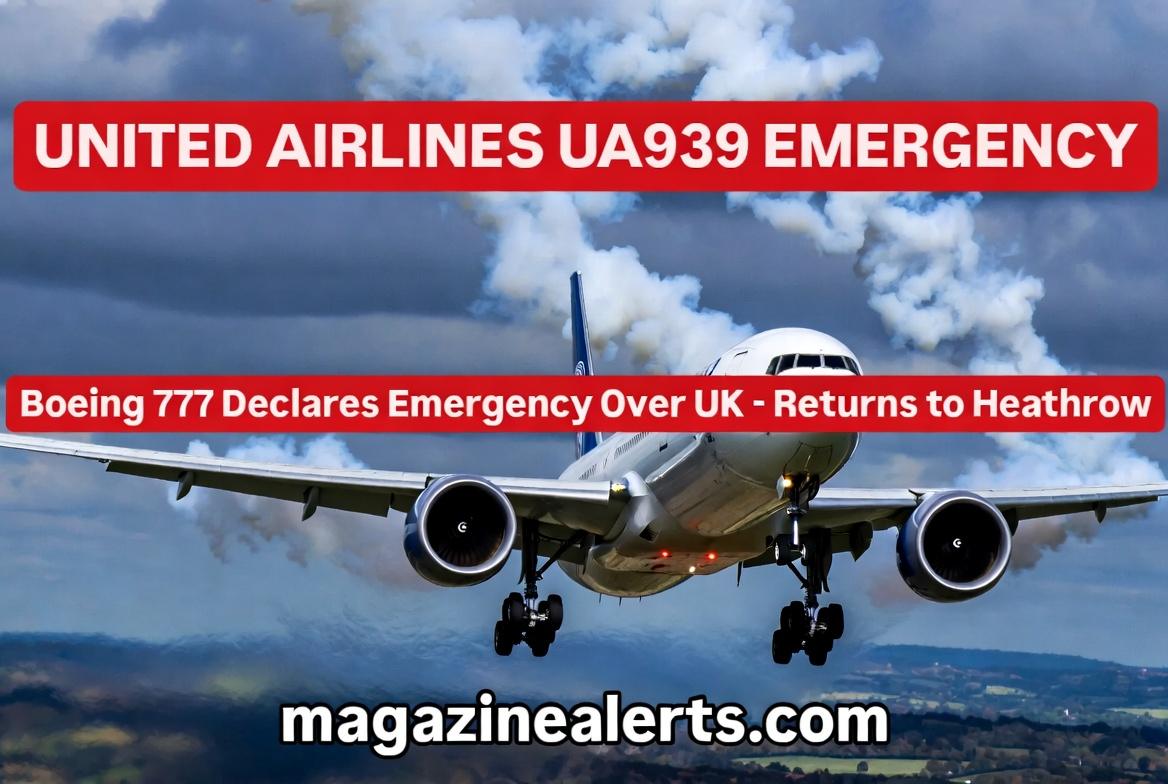
The united airlines flight ua939 emergency began shortly after takeoff from London Heathrow. The plane was a Boeing 777-200ER, heading to San Francisco. Just under an hour into the flight, the crew felt strange vibrations coming from the right engine.
At around 32,000 feet, the pilots knew something was not right. They made the call to declare an emergency. This is a serious step, but it does not always mean danger is close. It simply means the crew wants extra help and attention from air traffic control right away.
The vibrations were serious enough that the crew decided not to continue toward San Francisco. Instead, they chose the safest option. They turned the aircraft around and headed back to London Heathrow, where the flight had just departed less than an hour earlier that evening.
How the Crew Responded to the Emergency
Once the united airlines flight ua939 emergency was declared, the crew moved into a careful, practiced routine. They entered a holding pattern above northern England. This gave them time to talk with maintenance teams and figure out the safest next step for everyone.
The pilots eventually decided to shut down the right engine completely. This is a big decision, but it is not automatically dangerous. Modern jets like the Boeing 777 are built and certified to fly safely on just one engine if needed, especially for short return trips.
Before landing, the crew dumped fuel over open areas. This is standard procedure. It lowers the plane’s weight so it can land safely without exceeding structural limits. Within a few minutes, the fuel dump was complete, and the aircraft prepared for its return to Heathrow’s runway.
The Safe Landing Back at London Heathrow
After holding and preparing, Flight UA939 landed safely back at London Heathrow on runway 27L. The entire event, from takeoff to landing, took less than two hours. That is a fast, well-managed response for such a serious in-flight decision.
There were 271 passengers on board that evening, along with 13 crew members. Thankfully, nobody was hurt. No injuries were reported at any point during the united airlines flight ua939 emergency, which is the best possible outcome anyone could hope for.
This kind of outcome does not happen by accident. It comes from constant training, clear communication, and strict safety rules that every commercial pilot must follow. The successful landing shows how well-prepared flight crews handle stressful, high-pressure situations when something unexpected happens mid-air.
Why Engine Vibrations Are Taken So Seriously
Engine vibrations might sound minor, but pilots treat them with real caution. Vibrations can signal a loose part, an imbalance, or deeper mechanical trouble. Ignoring them could allow a small issue to grow into something far more dangerous later in the flight.
That is exactly why the united airlines flight ua939 emergency response felt so quick and firm. The crew did not wait to see if things got worse. They acted early, which is always the safer choice in aviation. Early action almost always leads to better outcomes.
Engineers later inspect the engine thoroughly before it flies again. They check for cracks, loose bolts, or worn parts. This careful process protects everyone on future flights. It is a good reminder that airlines take even small warning signs extremely seriously, every single time they appear.
The Aircraft Behind the Emergency: A Closer Look
The plane involved in the united airlines flight ua939 emergency was registered as N788UA. It is a Boeing 777-200ER, a long-range widebody jet. This particular aircraft had served United Airlines since 1997, making it nearly three decades old at the time.
Older does not always mean less safe. Aircraft like this one go through constant maintenance checks throughout their working lives. Every part gets inspected on a strict schedule. Still, older jets sometimes face mechanical quirks that newer models are less likely to experience.
After landing, the aircraft stayed grounded in London for about a day. It was later flown, empty, back to San Francisco for a deeper technical inspection. This extra step shows how seriously United Airlines treated the situation, even after the danger had clearly passed.
What Happened to the Passengers After the Diversion
Naturally, passengers on Flight UA939 faced a long delay. Instead of landing in San Francisco, they were back where they started, in London. That is frustrating for anyone, especially after already sitting through takeoff and nearly an hour in the air.
United Airlines worked to rebook everyone onto other available flights. This is standard practice after any major diversion. Airlines usually try to move passengers quickly, though wait times can vary depending on how full other flights happen to be that day.
If you ever face a similar situation, always check your airline’s app first. It often shows updates faster than waiting in line. The united airlines flight ua939 emergency is a good real-world example of why staying flexible and informed really helps during travel disruptions.
Is Flying Still Safe After Incidents Like This
It is normal to feel nervous after reading about an emergency landing. But here is the truth. Flying remains one of the safest ways to travel. Events like the united airlines flight ua939 emergency actually prove the safety system is working as intended.
The crew noticed a problem, reacted calmly, and landed without harming a single person on board. That is not luck. That is training, teamwork, and strict rules working together exactly the way they are designed to work, even under real pressure.
Every airline, not just United, deals with mechanical surprises sometimes. What matters most is the response. A fast, careful, well-trained response, like the one seen here, is exactly why serious injuries during in-flight emergencies remain extremely rare across the entire aviation industry.
Understanding Emergency Declarations in Aviation
Many people hear the word emergency and assume the worst. In aviation, though, declaring an emergency simply means the crew wants priority handling and extra support. It does not always mean the plane is about to crash or fail completely.
During the united airlines flight ua939 emergency, this declaration gave air traffic controllers a clear signal. It let them clear airspace and prepare emergency services on the ground, just in case they were needed. This is a normal, sensible safety step, not a sign of panic.
Pilots train for these moments throughout their entire careers. Simulators recreate engine failures, vibrations, and other issues again and again. So when a real event happens, the response feels calm and rehearsed, even though passengers on board may feel understandably nervous and unsure.

Lessons Travelers Can Learn From This Event
Every travel disruption teaches us something useful. The united airlines flight ua939 emergency reminds us to stay calm during unexpected delays. Panic rarely helps, but listening closely to crew instructions always does, especially during any kind of in-flight issue.
It also shows why travel insurance can be worth the cost. Sudden diversions can mean missed connections, hotel stays, or rescheduled plans. Having a backup plan, or at least travel protection, can turn a stressful day into a manageable inconvenience instead.
Finally, this event highlights how much work happens behind the scenes to keep flights safe. From maintenance crews to air traffic control, many people work together during moments like this. Understanding that teamwork can help nervous flyers feel a little more at ease next time.
United Airlines Flight UA939 Emergency: Quick Fact Table
| Detail | Information |
|---|---|
| Flight Number | United Airlines UA939 |
| Route | London Heathrow to San Francisco International |
| Date of Incident | September 28, 2025 |
| Aircraft Type | Boeing 777-200ER |
| Aircraft Registration | N788UA |
| Aircraft Age | Delivered to United in 1997 |
| Cause | Right engine vibrations at cruising altitude |
| Action Taken | Engine shutdown and fuel dump |
| Outcome | Safe return and landing at London Heathrow |
| Passengers Onboard | 271 |
| Crew Onboard | 13 |
| Injuries Reported | None |
| Aircraft Status After | Ferried to San Francisco for inspection |
Conclusion: A Safe Ending to a Tense Situation
The united airlines flight ua939 emergency started with a scary moment high above England. It ended with a safe, well-handled landing back at Heathrow. Every passenger made it home safely, and that is the outcome that matters most in any flight emergency.
This event is a strong reminder that aviation safety systems really do work. Trained crews, backup procedures, and careful engineering all come together during moments like this. The next time you hear about an emergency landing, remember this story and the calm, safe outcome it had.
Have you ever flown through a delay or diversion like this one? Share your experience in the comments, and always check your airline’s app for real-time updates before your next trip.
Frequently Asked Questions
1. What caused the united airlines flight ua939 emergency?
The crew detected unusual vibrations coming from the right engine while cruising at 32,000 feet, leading them to declare an emergency and return to London.
2. Was anyone hurt during the emergency landing?
No. All 271 passengers and 13 crew members landed safely, and no injuries were reported at any point during the event.
3. Why did the pilots dump fuel before landing?
Dumping fuel lowers the aircraft’s weight. This helps the plane land safely without going over its maximum landing weight limit.
4. How old was the aircraft involved in the emergency?
The Boeing 777-200ER, registered N788UA, had flown with United Airlines since 1997, making it nearly 28 years old at the time.
5. Did the flight eventually reach San Francisco?
The original flight returned to London. The aircraft was later flown empty to San Francisco for a full technical inspection.
6. Is it still safe to fly United Airlines after this incident?
Yes. The calm, well-trained crew response shows the safety system working correctly, which remains true across the wider aviation industry today.